
PAD, or peripheral artery disease, is a condition where the arteries carrying blood to your legs become narrowed, usually due to a buildup of fatty plaque. It is diagnosed with a leg artery ultrasound, a painless scan that checks blood flow at different points along the leg to find where narrowing or blockage is occurring. At Capri Ultrasound on the Gold Coast, we perform these scans regularly for patients referred with leg pain during walking, since this is one of the clearest signs something may be affecting circulation rather than muscles or joints.
Peripheral artery disease is common, and in Australia it affects a meaningful share of people over 50, particularly those with diabetes or a history of smoking. It is also often missed early on, since the main symptom, leg pain during activity, can easily be put down to general fitness or ageing.
The classic sign is cramping, aching or tiredness in the calf, thigh or buttock that comes on with walking and eases again with rest. This pattern is called claudication, and the distance you can walk before the pain starts often becomes fairly predictable over time. Other signs include cold feet, skin that looks pale or shiny, hair loss on the lower leg, and wounds on the feet or toes that are slow to heal. In more advanced cases, pain can occur even at rest, which is a sign the condition has progressed and needs attention sooner rather than later.
Leg pain during walking is often dismissed as a normal part of getting older, but it is worth mentioning to your GP, particularly if it follows a consistent pattern of starting after a certain distance and settling with rest. Peripheral artery disease is caused by the same process, atherosclerosis, that affects arteries around the heart and brain. This means someone with PAD in their legs has a higher chance of also having narrowed arteries elsewhere, which is part of why early diagnosis matters beyond just managing leg symptoms.
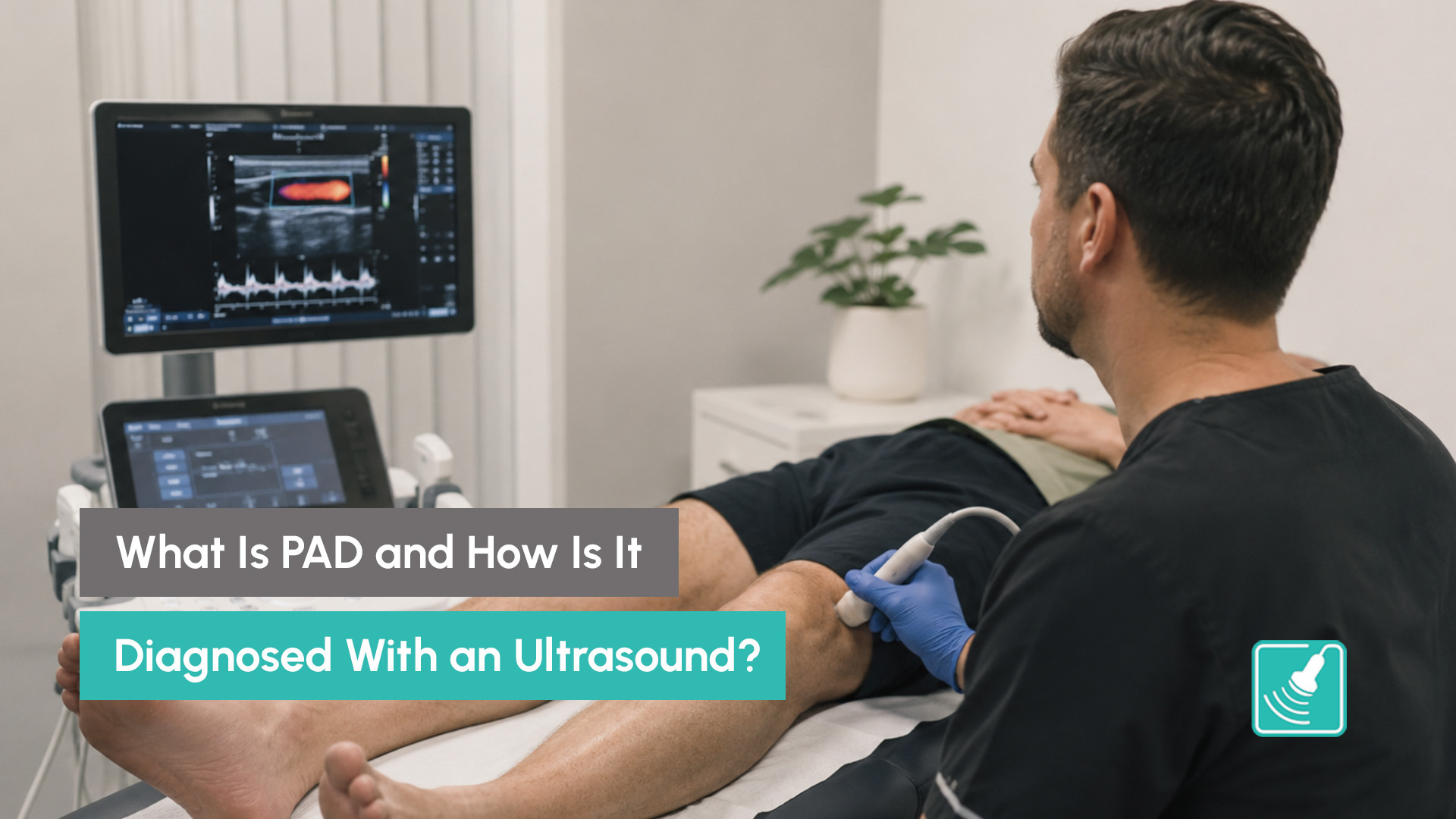
A leg artery ultrasound, sometimes called a lower limb arterial duplex scan, uses sound waves to measure how blood is moving through the arteries in your leg. Our sonographer checks blood flow at several points from the groin down to the ankle or foot, looking for areas where flow is reduced or turbulent, which can indicate narrowing. This is often paired with blood pressure measurements taken at the ankle and arm, known as an ankle brachial index, to give your doctor a clearer picture of how significant any blockage might be.
The scan does not involve needles, dye or radiation, and takes around thirty minutes. You may be asked to walk briefly on the day if your symptoms only appear with activity, since this can help show changes in blood flow that are not obvious while resting.
The main cause is atherosclerosis, where fatty deposits build up inside the artery walls and gradually narrow the space blood can flow through. Risk increases with smoking, diabetes, high blood pressure, high cholesterol and age, and having several of these factors together raises the risk further. Family history also plays a role. None of this means PAD is inevitable, but it does explain why your doctor may order a scan if you mention leg pain alongside one or more of these factors, even if the pain itself seems mild.
Leg pain with walking has a few possible causes, including nerve issues in the lower back, arthritis in the hip or knee, and muscle related problems. What sets PAD apart is the pattern of pain starting reliably at a certain distance and easing with rest, rather than pain that varies with position or is present even while sitting. An ultrasound gives a clear, objective answer either way, which helps your GP decide whether to manage the leg pain as a circulation issue or look elsewhere for the cause.
For many people, PAD is managed with lifestyle changes and medication rather than surgery. Structured walking programs are often recommended, along with quitting smoking where relevant and getting other risk factors like cholesterol and blood pressure under control. In more advanced cases, a vascular specialist may discuss procedures to improve blood flow directly. Our sonographer Brendan has worked closely with vascular surgeons for close to two decades, and you can read more about his background on our about us page. If you are also being assessed for related circulation concerns, our vascular ultrasound page covers the other scans we offer in this area, including carotid and DVT assessments.
For further reading on symptoms, causes and treatment, the Heart Research Institute has a clear overview of PAD, and healthdirect covers when to see a doctor and what treatment generally involves.
If your GP has raised the possibility of PAD, or you have noticed leg pain that comes and goes with walking, a leg artery ultrasound is a straightforward way to find out the potential causes. Medicare card holders are bulk billed for eligible ultrasounds at Capri Ultrasound with a valid referral, and we offer extended weekday hours to make booking easy. Get in touch if you have a referral in hand, or ask your doctor whether a scan is worth considering if leg pain has been bothering you for a while.