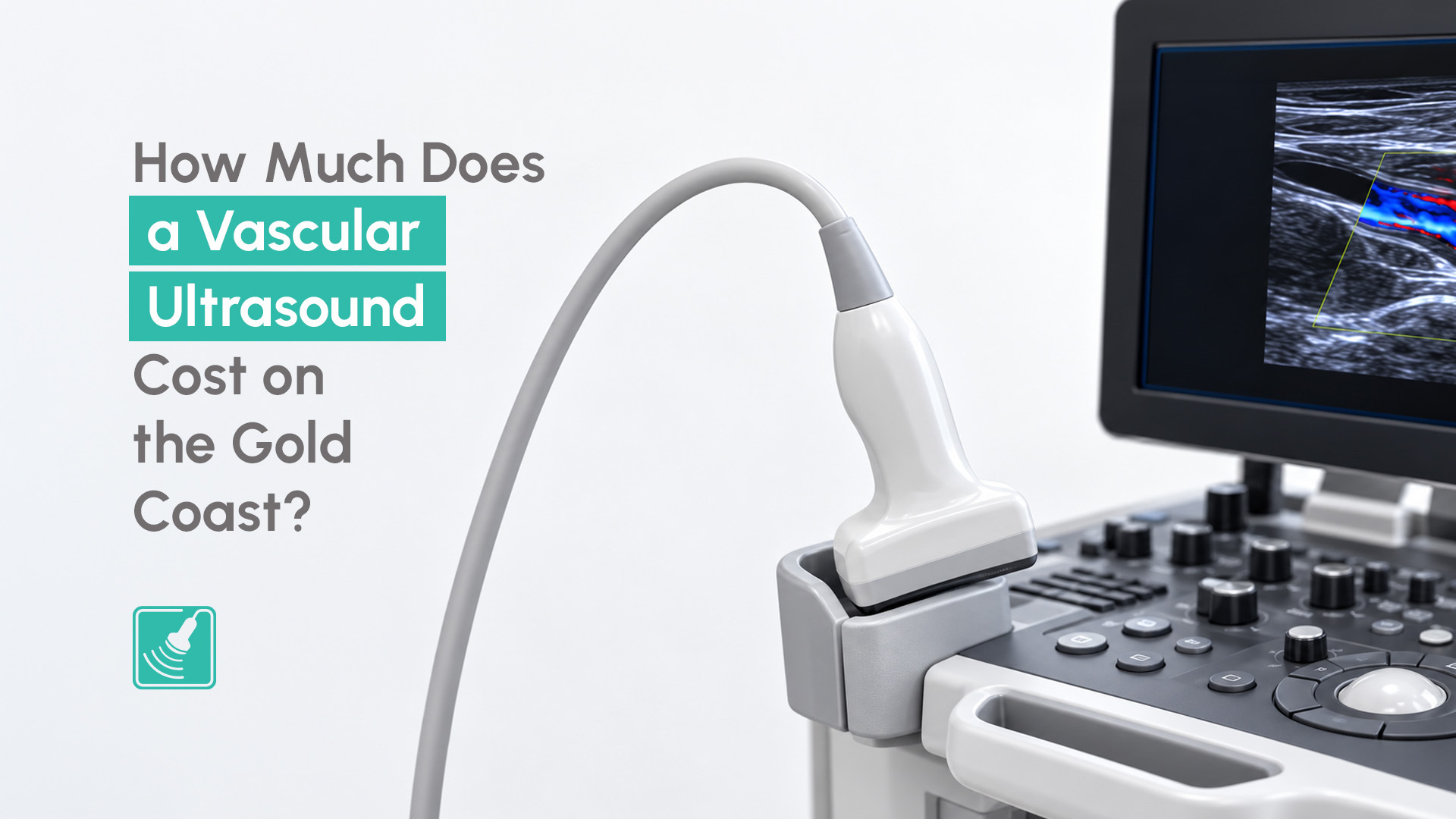

A carotid artery ultrasound is a scan that checks the two main arteries in your neck that carry blood to your brain. It looks for narrowing or plaque buildup that could raise your risk of a stroke or transient ischaemic attack. Doctors usually order one after symptoms like dizziness, one sided weakness or vision changes, or sometimes as a precaution if you have risk factors such as high blood pressure, high cholesterol or a family history of stroke. At Capri Ultrasound on the Gold Coast, this is one of the more common vascular scans we perform, and it is completely painless.
If your GP has mentioned a carotid artery ultrasound, it is natural to want to understand what the scan involves and what it is actually checking for.
Your carotid arteries run up either side of your neck and are the main supply route for blood, and therefore oxygen, to your brain. Over time, fatty deposits can build up on the inside walls of these arteries, a process called atherosclerosis. As the buildup grows, it narrows the space blood can pass through, which is sometimes described as carotid stenosis or arterial carotid narrowing. In more advanced cases, a piece of plaque can break away and travel toward the brain, which is how a stroke or TIA can occur.
Many people with early carotid artery narrowing have no symptoms at all, which is part of why doctors sometimes order a scan based on risk factors alone rather than waiting for symptoms to appear. When symptoms do occur, they tend to relate to reduced blood flow to the brain and can include sudden weakness or numbness on one side of the body, slurred speech, difficulty finding words, temporary vision loss in one eye, or a sudden severe headache. These symptoms can also indicate a TIA or stroke is happening in real time. A stroke is a medical emergency requiring immediate attention.
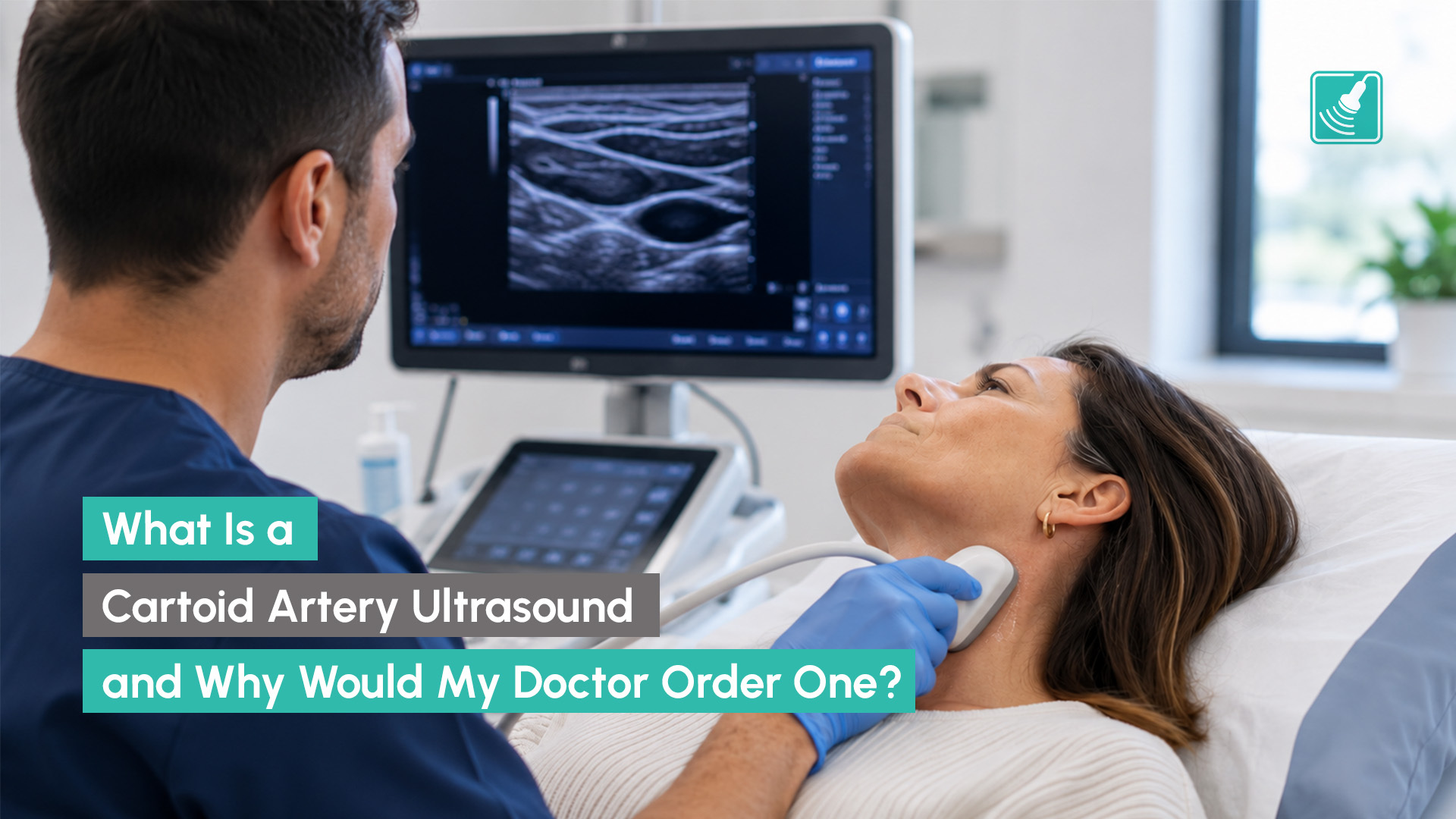
The scan is a type of duplex ultrasound, meaning it looks at both the structure of the artery and the speed and pattern of blood flow through it. You lie down while a sonographer moves a small probe along either side of your neck, which takes around twenty to thirty minutes. There is no need for injections, dye or radiation, and most people find it comfortable enough to relax through. The images show whether the artery walls have thickened, whether plaque is present, and how much this is narrowing the space available for blood flow.
Your GP might refer you for this scan if you have had symptoms suggestive of a TIA or stroke, even if they resolve quickly, since early assessment matters. It is also commonly recommended for people with several risk factors together, such as smoking, diabetes, high blood pressure or high cholesterol, or those with known plaque elsewhere, such as in the arteries supplying the heart or legs. A family history of stroke or carotid artery disease can also be a reason your doctor suggests a scan, even without symptoms.
The right next step depends on how significant the narrowing is. Mild to moderate narrowing is often managed with medication such as blood thinners or cholesterol lowering drugs, along with lifestyle changes like quitting smoking and increasing physical activity. More significant narrowing, particularly in someone who has already had symptoms, may lead to a referral to a vascular surgeon to discuss options such as carotid endarterectomy, a procedure to remove plaque directly from the artery. Your doctor will use the ultrasound findings, along with your history and other risk factors, to guide this decision.
If you are also being investigated for related circulation concerns, our vascular ultrasound page covers the other scans we offer for arteries and veins, including leg artery and DVT assessments. You can also view our full range of ultrasound services if your referral covers more than one area.
For further reading on stroke risk and warning signs, the Stroke Foundation explains how ischaemic strokes occur, and healthdirect has clear guidance on TIA symptoms and why urgent attention matters.
If your doctor has referred you for a carotid artery ultrasound, or you have risk factors that make it worth discussing, getting the scan done promptly gives your doctor the clearest picture of your stroke risk. Medicare card holders are bulk billed for eligible ultrasounds at Capri Ultrasound with a valid referral, and we offer extended weekday hours to make booking straightforward. Get in touch with your referral in hand, or speak with your GP about whether a carotid artery ultrasound is appropriate for you.