
A spider veins treatment is usually a straightforward cosmetic procedure such as sclerotherapy or laser, done without the requirement of an ultrasound first, since spider veins rarely usually do not involve a deeper underlying problem. Occasionally, larger, incompetent feeder veins underlie the spider veins and need to be treated for successful cosmetic outcomes. It is up to your treating doctor to determine whether an ultrasound is required prior to treatment of spider veins. Varicose vein treatment is often a different matter entirely, since varicose veins are frequently a sign of faulty valves in the veins of the leg, which usually means an ultrasound is needed before any treatment decision is made. At Capri Ultrasound on the Gold Coast, we perform the vascular ultrasounds that guide this decision, though the treatments themselves are carried out by a phlebologist such as Dr. Nicholas Teo of the Better Veins Clinic (Better Veins Clinic) or a vascular surgeon.
If you have both types of veins, or you are not sure which one you are dealing with, understanding why the treatment pathways differ can help make sense of what your doctor recommends.
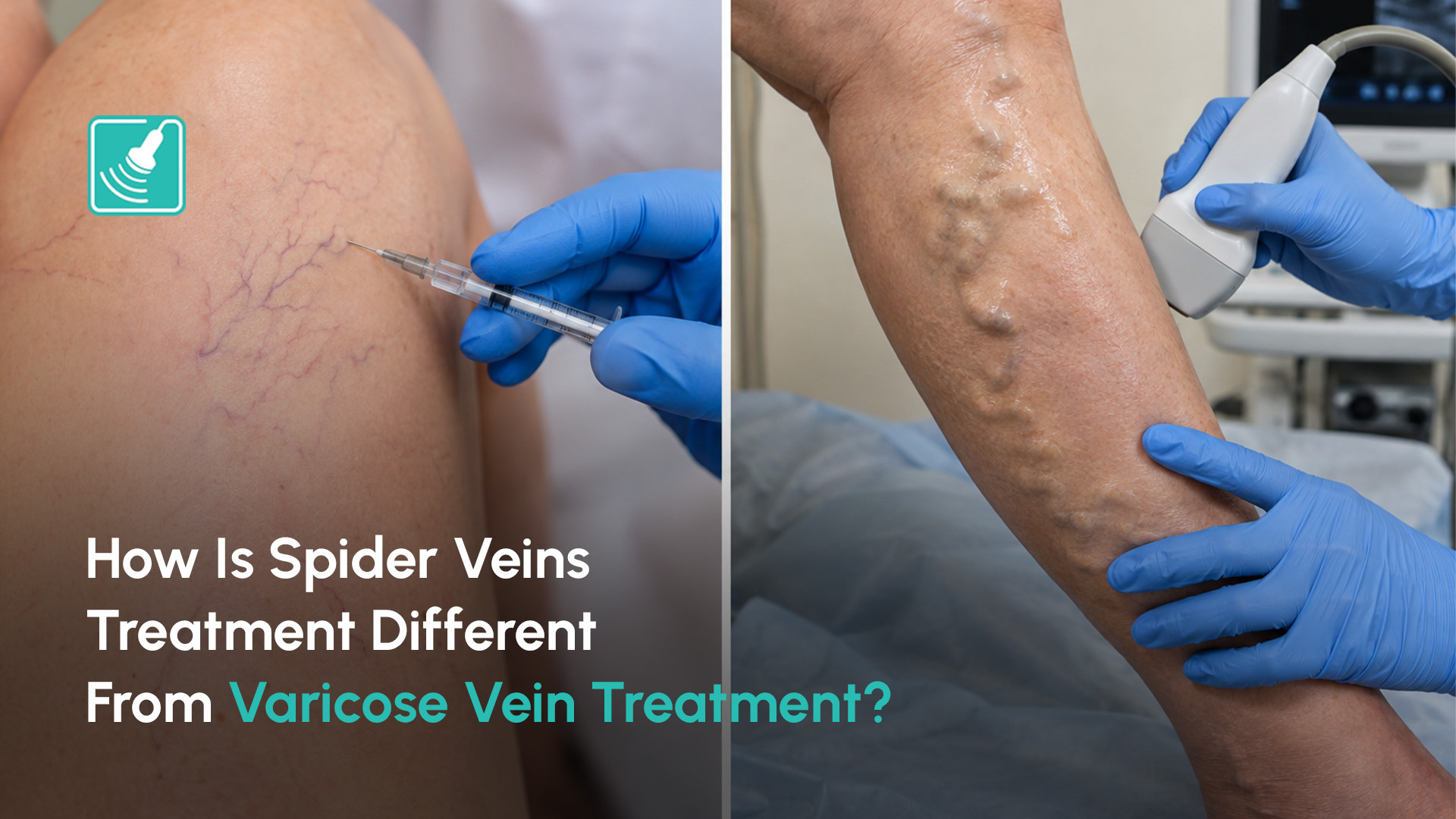
Spider veins are small, thin veins close to the surface of the skin, often red, blue or purple, and arranged in a web like pattern. Varicose veins are larger, bulging and twisted, sitting further beneath the skin. According to the Better Health Channel, spider veins are essentially a smaller, milder version of the same underlying process that causes varicose veins, faulty valves that allow blood to pool rather than flow properly back toward the heart. More information can be obtained at FaQs Varicose Veins – Better Veins Clinic, Varicose Veins – Better Veins Clinic and Spider Veins – Better Veins Clinic.
Spider veins rarely cause symptoms beyond their appearance, so treatment is generally aimed at how they look rather than an underlying medical issue. Sclerotherapy, where a solution is injected directly into the vein to close it off, is the most common approach and can typically be done without imaging beforehand, since these veins are small, close to the surface, and not usually connected to a deeper venous problem that needs mapping first. If underlying incompetence of varicose veins is suspected then your treating doctor may order an ultrasound prior to treatment. More information on treatment can be obtained at Treatments – Better Veins Clinic.
Varicose veins are more likely to be linked to a condition called chronic venous insufficiency, where valves deeper in the leg have failed, allowing blood to flow backward and pool in the veins you can see on the surface. Treating only the visible vein without addressing the source further up the leg often means the problem returns. An ultrasound maps exactly where the faulty valves are and how severe the reflux is, which is why doctors typically request one before deciding on treatment. You can read more about what this scan involves on our varicose vein ultrasound page.
Depending on what the ultrasound shows, treatment options your doctor may discuss include compression stockings and lifestyle changes for milder cases, sclerotherapy for smaller affected veins, or procedures such as endovenous laser ablation or radiofrequency ablation for larger veins with significant valve failure. Healthdirect notes that varicose vein surgery and other treatments are generally considered once the extent of the problem is properly understood, rather than based on appearance alone. More information on treatment can be obtained at Treatments – Better Veins Clinic.
Occasionally, yes. Spider veins can sometimes be fed by a larger, less visible varicose vein higher up the leg, in which case treating the spider veins alone will not fix the underlying issue and they are likely to return. If spider veins are widespread, keep recurring after treatment, or appear alongside aching, heaviness or swelling in the leg, it is worth asking your doctor whether an ultrasound is warranted to check for a feeding vein further up.
This depends on whether the treatment is considered cosmetic or medically necessary. Purely cosmetic spider vein treatment is generally not covered by Medicare, while varicose vein treatment may be, particularly where symptoms or complications are present, though this is determined by your treating doctor rather than the imaging clinic. What is separate from this is the diagnostic ultrasound itself, which is bulk billed for eligible patients with a referral from a doctor at Capri Ultrasound, regardless of what treatment path is eventually chosen. You can see our full range of bulk billed vascular scans on our services page.
Yes, a valid referral from a doctor such as your GP or vein specialist is needed for the scan to be bulk billed. If you have noticed spider veins, varicose veins, or both, and are not sure what the next step should be, your GP is the right place to start, since they can examine the veins directly and decide whether an ultrasound is a sensible next step before referring you on for treatment.
If your doctor has recommended an ultrasound before deciding on varicose vein treatment, getting a clear picture of what is happening beneath the surface makes the eventual treatment more likely to work properly the first time. Medicare card holders are bulk billed for eligible ultrasounds at Capri Ultrasound with a valid referral. Get in touch if you have a referral in hand, or speak with your GP about whether an ultrasound is the right next step for your veins.